Sunday, 19 April 2015


Monty Python

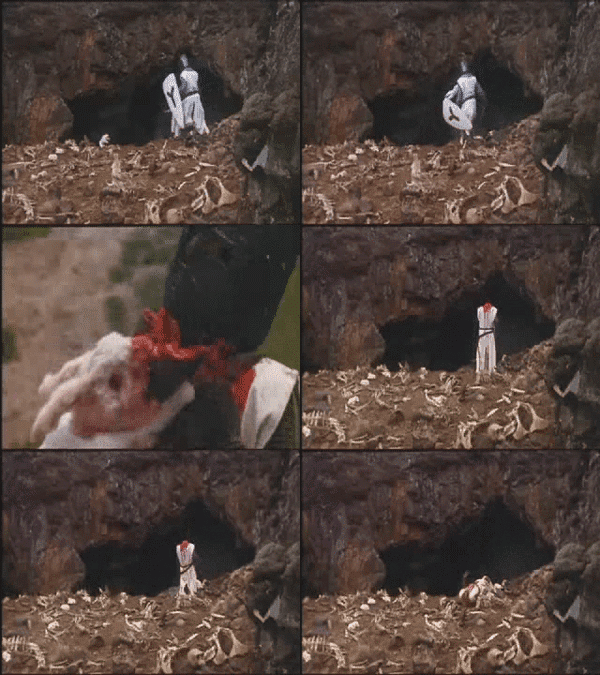
A British surreal comedy group also known as 'The Pythons' was created in 1969 with their comedy sketch show 'Monty Python's Flying Circus' that first aired on the BBC on the 5th of October 1969 and ended in 1974, the members of the group were Graham Chapman, Eric Idle, Terry Gilliam, Terry Jones, John Cleese and Michael Palin.
The televisions series popularity had the Pythons preforming touring stage shows, films, a stage musical, films, several book and albums.

Even though the groups show 'Monty Python's Flying Circus' ended they continued to work together in films:

And Now for Something Completely Different  - 1971


Being the Pythons first feature film, it was made up off sketches from the first two seasons of the 'Flying Circus'.


Monty Python and the Holy Grail - 1975


This film had completely new material made by the Pythons and was based on the King Arthur Legend.


Monty Python's Life of Brian - 1979
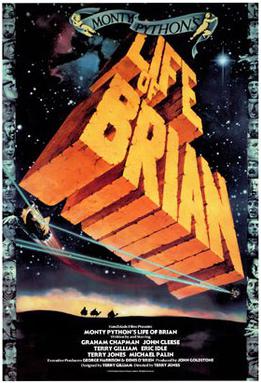

due to the success of their previous film 'The holy Grail', the public and reporters asked what the Pythons next film was going to be even though the group hadn't even thought of making a third one.


Monty Python Live at the Hollywood Bowl - 1982
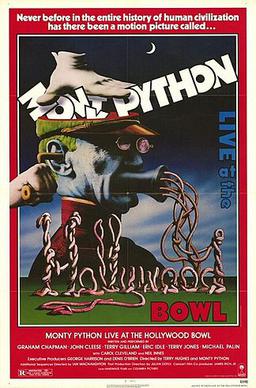

Filmed during the preparations for 'The meaning of life' at the Hollywood Bowl the Pythons preformed sketches from their original television series in front of an audience.


Monty Python's The Meaning of Life - 1983

The film was seen as one of the Pythons most bizarre and darkest pieces of work, it was also the last one to feature all six Python members before Graham Chapman passed away.


Graham Chapman
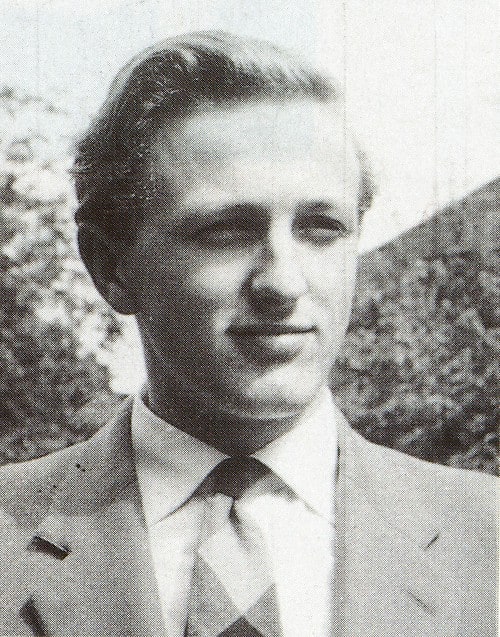


Graham Chapman, also being called 'Gray Chapman' was born on the 8th of January 1941 in Leicester and died at the age of 48 on the 4th of October 1989 in Kent due to tonsil and spinal cancer.
He was anEnglish actor, comedian and writer. Before joining the 'Monty Python' group he was writing professionally alongside John Cleese for the BBC during the 1960's and took part in sketches to the radio series 'I'm Sorry, I'll Read That Again' and television programmes such as 'The Illustrated Weekly Hudd', 'This Is Petula Clark' and 'This Is Tom Jones'. Chapman also co-wrote several episodes of the comedy series 'Doctor in the House'.

Chapman joined the other Pythons with Cleese for their sketch comedy show 'Flying Circus' in 1969 and was considered by the other Pythons that he was the biggest contribution in the writing room and scripts of their sketches, throwing in ideas or lines to use in their sketches.
He had played the leading roles in two of the Pythons films 'Life of Brian' and 'The holy Grail' and was complimented by John Cleese as "possibly the best actor of all of us".

Moving to Los Angeles in the 1970's he guest-starred on many television shows like 'Still Crazy like a Fox', 'The Big Show' and 'Hollywood Squares'. Once returning to Britain and taking part in shows like the 'Dangerous Sports Club' and completing his film project 'Yellowbeard' he reunited with the Pythons for the film 'The Meaning of Life' the last he was to star in with the Pythons before passing away.


Eric Idle


Eric Idle was born on the 29th of March in 1943 in Harton village and now currently at the age of 72.

He's an English comedian, singer, actor, author and comedic composer, apart from being a member of the Pythons he's also a member of 'The_Rutles' on Saturday Night Live and the author of Spamalot a broadway musical that's made 17 productions. He was a competent guitarist and did many of the groups famous musical numbers when he was with the Pythons. 

Eric attended the Pembroke College in Cambridge, studying English and joined its 'Footlights' club with his future Pythons Graham Chapman and John Cleese after just one year at Cambridge. 
He starred in a a children's television comedy series 'Do Not Adjust Your Set' that co-starred future Pythons Michael Palin and Terry Jones, Eric Idle also appeared as a guest in some episodes of the television series 'At Last the 1948 Show' also co-featuring the future Pythons John Cleese and Graham Chapman.

He mostly wrote for the Python group by himself at his own pace though he found it difficult when presenting material to people while making it seem funny without the back-up, support of a Python and partner.
His work in the Pythons were often recognised to have verbal peculiarities, showing the use of language and communication in the characters such as the man that spoke in anagrams and a butcher that altered between politeness and rudeness each time he spoke. 

When all six members of the Pythons pursued solo careers and projects, Eric's first solo work was on the BBC Radio One show, Radio Five, preforming sketches and links to records which ran for two seasons between 1973 to 1974.
One of his most recent projects was being the creator and director of the live show Monty Python Live' at the O2 Arena with the remaining Pythons and special guests in London between the 1st and 20th of July 2014.


Terry Gilliam
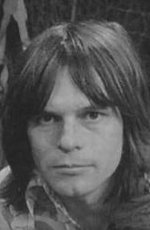

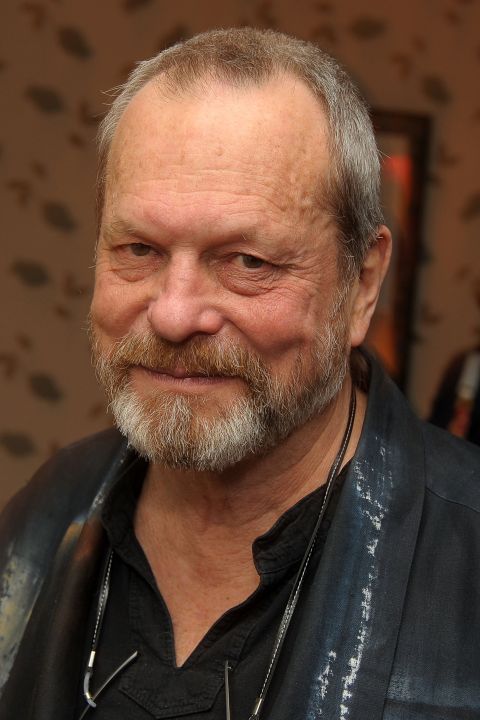
Terry Gilliam was born on the 22nd of November 1940 in Minneapolis and is currently at the age of 74, the only 'Python' not born in Britain but eventually became a naturalised British citizen in 1968.

An American-born British film director, actor, screenwriter, film director and animator, his animations featured in many of the Pythons films. He's directed 12 feature films, including 'Time Bandits' -1981, 'Brazil' - 1985, 'The Adventures of Baron Munchausen' - 1991, 'Fear and Loathing in Las Vegas' - 1995 and 'The Imaginarium of Doctor Parnassus' - 2009. 

Eric started his career as a strip cartoonist and animator, one of his photographic strips he made for 'Help!', once it was folded Gilliam moved to England and animated sequences for the children's series 'Do Not Adjust Your Set' which featured the future Pythons Eric Idle, Michael Palin and Terry Jones.

Gilliam was part of the 'Monty Python's Flying Circus' but credited as an animator at first before becoming a full member of the group. His cartoons were used to link the Pythons sketches together as well as doing visual language for the group on their book covers and title sequences of their films, his animations mix his own art with moving cutouts and backgrounds.
He appeared in several sketches with the Pythons though rarely had main roles in them, mostly playing parts no one else wanted to play as most of the time they would require a lot of make-up or uncomfortable costumes.


Terry Jones


Terry Jones was born on the 1st of February 1942 in the town Colwyn Bay and is currently at the age of 73.

A British comedian, actor, author, screen writer and film director, he's written many books and screenplays including comic works and serious writing on medieval history, is a member of the UK poem society with his poems having appeared in the 'Poetry Review', also being the creator and co-producer of an animated television programme that ran for two seasons called 'Blazing Dragons'. Growing up he attended St Edmund Hall in Oxford to read English as well as studying some history, while there he preformed comedy with the future Python Michael Palin in the Oxford Revue. 

He wrote for eight David Frost programmes that were on British television, along with michaael Palin he wrote lyrics for the Barry Booth album "Diversions" in 1968, he also appeared in the television series 'The Complete and Utter History of Britain', Twice a Fortnight and 'Do Not Adjust Your Set'.

Terry Jones took interest in the Pythons show and encouraged them to have "fluid movement of one sketch into another", he demonstrated in many of the sketches with Michael and wanted to make them "visually impressive". 
He co-directed 'The Holy Grail' and became the sole director for  'Life of Brian' and 'The Meaning of Life', as a film director he had more control of the projects so he made a visual style that fit the humour of the projects a lot better, his later films include 'Erik the Viking' - 1989 and 'The Wind in the Willows' - 1996 as well as directing some operas.


John Cleese
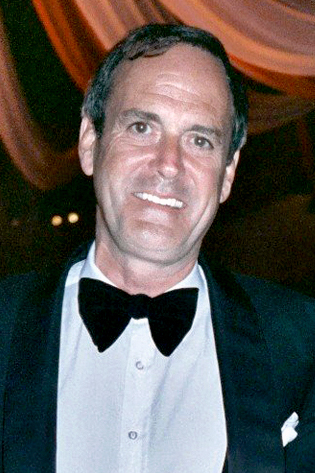


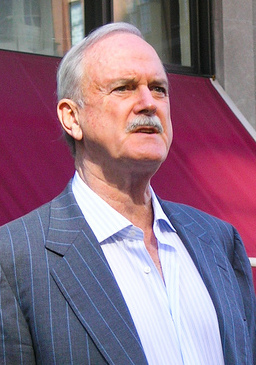
John 'Marwood' Cleese was born on the 27th of October 1939 in Somerset and is currently at the age of 75 and co-founded 'Monty Python' in the late 1960's.

An English comedian, actor, film producer and writer, he was successful at the Edinburgh Festival Fringe for his screenwriting and being a performer on 'The Frost Report'. He starred in 'Clockwise' in 1986 swell as being in two James Bond films, two Harry Potter films and the last three Shrek films.
John and his first wife 'Connie Booth' co-wrote and starred in a british sitcom called 'Fawlty Towers' that broadcasted between 1975 to 1979.

John Cleese was unable to go straight to University of Cambridge due to there being twice the usual applicants for places, so he instead returned to his prep-school for two years to teach History, Science, English, Geography and Latin at 'St Preparatory School'. After he finally took a place he had won at Downing College, Cambridge to read Law.
Having joined Cambridge Footlights as a screenwriter and cast member, he met his future writing partner Graham Chapman. While he preformed in 'Half a Sixpence' a musical, he met the future Python Terry Gilliam and his first wife Connie Booth he married on the 20th of February 1968.


Michael Palin


Michael 'Edward' Palin was born on the 5th of May 1943 in Sheffield and is currently at the age of 71.


Wednesday, 1 April 2015

Automatic Art


  • Used mainly yellow, orange and gold colours at the moment.
  • Most of the time I focused on cutting out of magazines before adding my own automatic writing.
  • Used the word 'Contaminated' from my automatic writing I had done before which influenced me quickly skin through magazines to make the word 'infected' and the idea of just sticking down body parts randomly like i have with the cats head on a woman's body.
  • The colour of the golden dress seemed to encourage me to use a matching colour, resulting in the speech bubble being yellow and the text orange.

Thursday, 26 March 2015


10 Job Roles Conclusion


I had options to look at newspaper and TV adverts of companies and workplaces, also via online through different kinds of websites that list jobs linked to or specialise in media, art and design throughout the research of 10 different job roles. Though I also had people recommend job roles that they know about or any other websites. I mainly looked for the job roles on two websites;

  • National Careers Service
  • Prospects


National Careers Service had a large list of different kinds of jobs, though not all of them were clear why they were linked to Art, Media and Design.

The made a list of 10 jobs that interested me the most and be a job role that I would enjoy to have:

  • Animation
  • Graphic Design
  • Art Editor
  • Photographer
  • Illustrator
  • Tattooist
  • Make-up Artist
  • Production Designer
  • Design Engineer
  • Costume Designer


I learnt that almost all of these job roles require expierience and qualifications, though the qualifications don't have to be A* if you have a strong portfolio, reliable skills and work experience linked to the job role.
The most wanted and preferred skills for most job roles include being a quick and concentrated worker so deadlines are to be reached within the preferred time, understand different software's and computers/devices that are supplied, having an imagination to think up new ideas, artistic skills etc.

The information I gathered by researching the job roles helped me understand and prepare for future employment in a workspace independently or in teams. Building up a portfolio of my work and qualifications with a plan of how I would present it if I was asked to. Self-employment is also an option since it's recently became very popular and easier to understand and do, people doing commissions of their art, designs etc. for people online for a fee, the amount depending what their client/commissioner asks for.


Monday, 23 March 2015


Bruce Lacey


Bruce Lacey was born in 1927, he's a British artist, eccentric and performer.
He had been in the Navy before being known as an artist, completing the national service which was where he practiced some of his performance and knowledge of art and mechanical constructs.
He studied at Hornsey College of Art from 1948 then at the Royal College of Art in the early 1950's, in the 1960's and 1970's he visited a professor at art colleges from St lves to Leeds.
Bruce Lacey contributed to an exhibition in 1968 called Cybernetic Serendipity directed by Jasia Reichardt, a British curator, art critic and writer, Lacey exhibited some of his creations.
Bruce Lacey has made props for movies and shows such as 'It's a Square World' as well as haven had an act in Richard Lester's, an American film directer, 'The Running Jumping and Standing Still Film' that is a short and just eleven minutes long that was created over two sundays in November 1959 with the budget of £70. He's been featured in comedy shorts and feature films like 'Uncles Tea Party', Defective Detectives' and 'Smashing Time'
Before researching Bruce Lacey I did not know that the robots he created were like friends to him, one of them being a best man at his wedding.


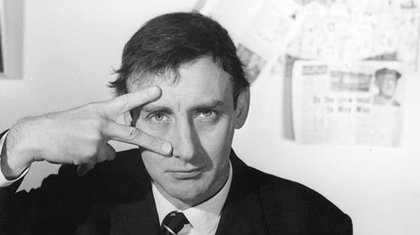
Spike Milligan


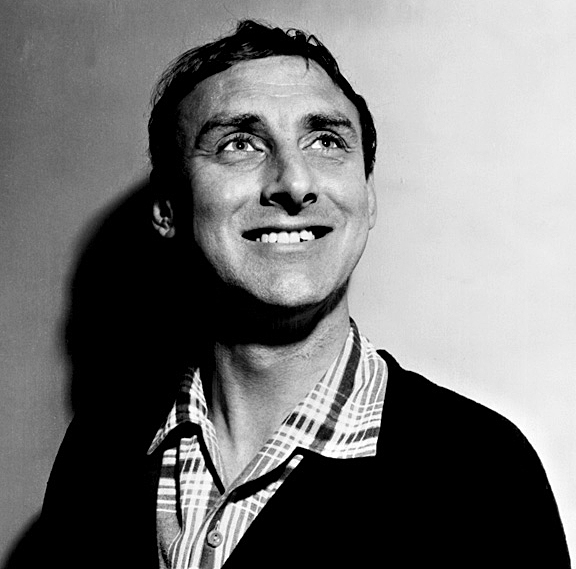
Spike Milligan had an Irish nationality, his real name is Terence Alan Milligan though he disliked his first name and began calling himself "Spike" after hearing a band called 'Spike Jones and the City Slickers'.
Was born on the 16th of April 1918 in Ahmednagar, British India and died on the 27th of February 2002 at the age of 83 in East Sussex, England. The reason he was born and first lived in India was because his father was in the British Indian Army.
Terence was a comedian, musician, actor and a solider in the second world war but was most known for being a playwright, poet and screenwriter.
One of Spike Milligan's poems called "Welcome Home"
 
Welcome Home
 
Unaware of the crime
they stood me in the dock.
 
I was sentenced to life....
without her.
 
Strange trail.
No Judge.
No Jury.
 
I wonder who my visitors will be.
 
 
 His work influenced Monty Python, Robin Williams and many other artists.
 Milligan was the co-creator, principal cast member and main writer of 'The Goon Show' which was a British radio comedy programme. 
 

Thursday, 19 March 2015


T-Shirt Design


As I thought of a design to go on a piece of clothing such as a hoodie or t-shirt I wrote down a short list of names that I would like my design to be named under, a title for it like clothing companies 'Nike', 'Vans' and 'Adidas' does, their logos not really looking like what the name of it is. 

The names I thought I could use were;


  • Molar
  • Collar
  • Bell
  • Busted
  • Orbit
  • Hooked


I thought up what kind of logo and designs I would have on a t-shirt or hoodie, wanting something different and interesting to see while the design not being too big or small when it's on either the front or back that could possibly link with the title, such as using a picture of a molar tooth and manipulating it to look like a letter. I made some quick sketches of my ideas, the sketches actually linking to what I find interesting and would buy myself if I saw it on some clothing, this included a 3D looking model of a bell, quick sketches of a planet that I linked to the look of Jupiter and Saturn, and vampiric teeth.


After getting the sketches and drafts of my design, logo and title I began to develop it on Photoshop and Illustrator.


With the logo I just wanted to keep it a black font, but when I tried it dark coloured tops I realized it didn't stand out as much as I wanted it to, so I had the title/name of the brand have a red fill and black outline when on darker coloured backgrounds.
I developed the mouth of vampiric teeth idea and gave it a white lighting effect, having the design made up of three main colours with different levels of consistency or with a fading effect, black, red and white. I also thought of using a molar tooth as part of the logo, linking it together with the main design. As I continued to develop the idea I thought how I could improve it, I came to the idea of using some kind of pattern around or inside the main design like the 'hype' brand does, this way it would stand out more. I used a large, rounded thin bristle brush on Photoshop and did a large group of scribbles in a circle motion, once I was happy with the pattern I debated if it should go around the teeth design or inside it, though I chose to have it on the inside, giving it the effect that the pattern is on the teeth along with the white shading.


Review

Brand ID


The ideas behind my design and logo idea was it being linked to my own interests of the supernatural, this linking it to vampiric teeth that has a sharp smooth look to them. The smooth, sharp look of the main design inspired me to have the title of the brand linked to it, so I chose the closest font I could find of what I wanted it to be and edited some of the letters to have sharp, pointed edges to them.

Strengths

I believe the strengths overall in my work was in my sketches I used my own ideas linked to my own interests, making a cut down, short list of what names I would possibly use, the main designs and then how I could link them together like 'All Star Converse' does in some of their designs. The developed, cleaner and smoother version of my design really stands out to me as I go back to look at how I started off with a plain design of a mouth of teeth and developing it to have shadowing, lighting effects and design all while using the main concept colours. 

Weaknesses

The weaknesses in my work and what I would improve was the overall development of my ideas since I didn't have a lot of different ideas even when I could've included even more. The other design I was thinking of using, the planet inspired by Saturn and Jupiter mixed together, could've had more final development on it by filling the lines in and trying out the pastel colours I was planning to use on it, though I didn't do this because I was focusing more on my teeth design and logo.

Logo ID


The 'hype' brand looks like it is using a simple signature, hand written technique for the design and logo, adding more elements to it such as a background or frame to stand out and be more eye-catching.

The converse brand uses different colours, frames and font for the different logos they use, but always use a star in them since the brand has became well known and popular that the use of a star would have people think of the brand 'Converse'.