Showing posts with label Evaluation. Show all posts

Friday, 9 March 2018

Evaluation; Project Review


Research Methods (200 words minimum):


  • Discuss your sources, including primary and secondary visual research and research into your subject. How effective have your research skills been and how have they formed starting points for your ideas? 
  • Discuss your contextual research, how has the work of other artists and designers influenced and informed your own approach?

Personally I believe I haven’t really had to take a lot of research and references from artists, they haven’t really had that much of an effect on my work apart from taking some inspiration from their paintings shapes and forms.I took inspiration and research from two artists I saw at a gallery in Hull for the TurnerPrize, Hurvin Anderson being one of the winners with one of his paintings, and Stanley Spencer being included in the gallery. Hurvin Anderson’s artwork used bold block colours, keeping them consistent in a painting, but not having a consistent shape to objects, people, plants etc. The style of the colours flowing out of the lines and down the canvas gives it an effect that still makes it look like what its supposed to be without defining it with lines. 
I took inspiration from his artwork by using some bold colours and shapes of plants, rocks and people not being completely correct, but still looking like what they’re supposed to.Stanley Spencer’s style is quite detailed and defined, he uses both bold and realistic colours in his paintings, ones of people have strong details, lighting and shadows, making the colours pop. Paintings of plants look like photographs with a defining filter, his paintings have so much detail and uses dark and light colours incredibly well, making colourful plants pop even more. I used the idea of using details into certain parts of my concept pieces and using certain brushes to make different textures.

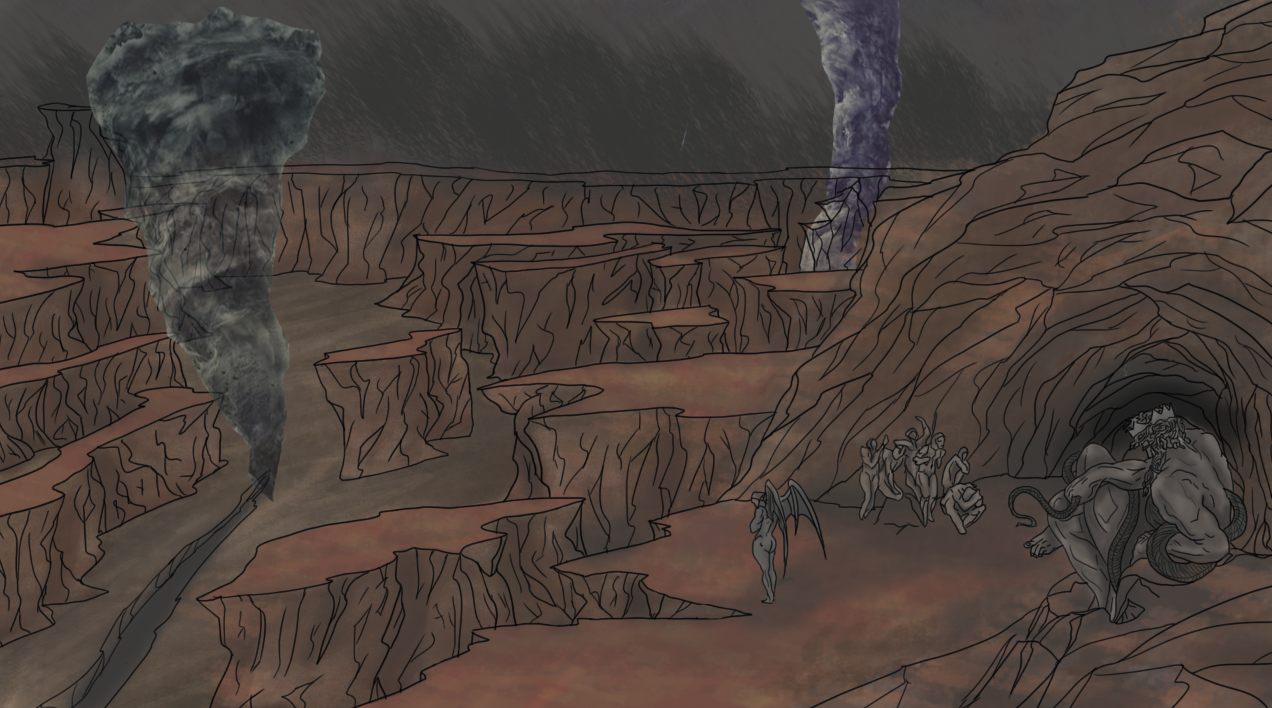
I have done a lot research of research into the ‘Divine Comedy’ poem that includes the poem about the rings of hell, I took references from some of the pictures included, observing the environments and details of the different levels of hell so I could use them in my work. With the concept of hell down, I then linked to the sculptor of ‘The Thinker’ Augustene Rodin who made a large sculpture of the gates of hell in his final years, which ended unfinished. I linked Divine the drag queen into it who hosted one of the Alternative Miss World’s events to the name of the long poem of the 'Divine Comedy'.
Overall I didn't use too much research in the final parts of the project, this mainly being the artists to use as reference, but for the start all of this research gave me a good starting point for my project, I understood the origins of one of the stories of hell and the environments included, understanding the kind of effects, textures, weather, lighting etc. that each environment needed.


Ideas Development (200 words minimum):


  • How have you demonstrated independence in decision-making, planning and developing creative solutions? Discuss and review your project proposal 
  • How well have you selected and used media, materials and technologies to develop creative solutions? 
  • Discuss how you have integrated and applied practical and theoretical understanding to solve problems.

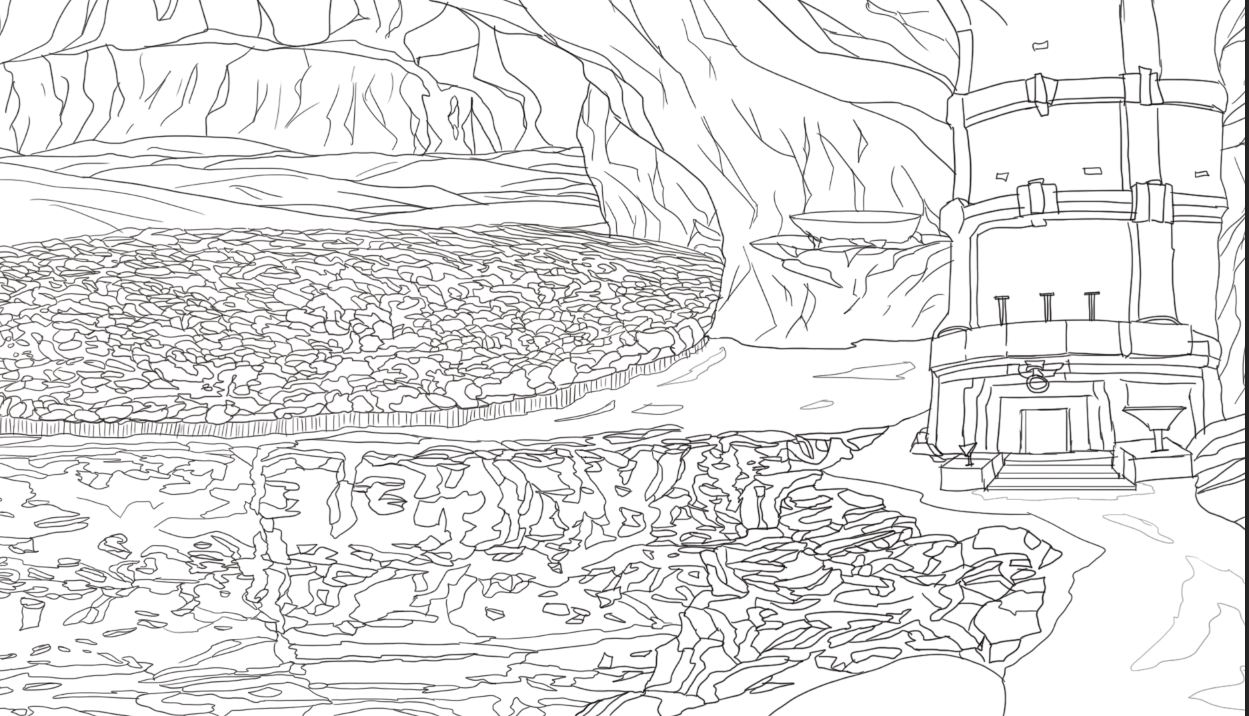
I've stayed pretty much on track with my project proposal, only making a few changes when a problem arose with referencing an image to file sizes of my pieces. I did astray from the proposal of drawing the baphomet statue in different ways, as a female, in clothing etc. But instead focused more on making the environments of hell. I did alternatives when I got stuck on an idea like for if I should include people and demons within the concepts, using references and including them in to give a better 'feel' for the environment, letting people get a better idea of the concepts if they already have some knowledge behind the rings of hell and the 'Divine Comedy' poem.

My independent decision making in this project is alot more prominent than it has been in previous projects. I had quite a bit of trouble how to first start with my concept art, I didn't know if I wanted to do a bold, independent colours with thick lines style, blended, or one with more texture and details. I've made decisions in choosing what concept to work from, what style to go with, if I should use a certain textures etc. Some of the decisions also included the dogs heads in the third concept, unsure if I should go with my cartoony style of a dog, references from wolves and large dogs, or from a reference of the actual mythical creature it's based on.

I stayed as minimum as I could with using references and materials, mainly to not crowd and confuse myself with all the different piece of information I would use for each one and such, references I used mainly being from online, which I all Harvard referenced into a blog post, keeping it as minimum as I can. The only 'materials' I used during the project was when I made a little concept of the rings of hell with stitching fabrics together, showing an alternative of the rings, each fabric and material representing the ring of each level, this mainly being by the colours.
Technology I used in the entire process of my work was mainly photoshop, my drawing tablet and an iMac, though I believe my new drawing tablet has made it alot different for me when I'm working, my style is different, alot more defined and confident. During this project I found myslef learning more things in photoshop and how professionals in my subject area used it, this included taking real life textures and putting them in with your own work and blending them in, also learning how to make different textures and details with certain brushes I hadn't really used before or though were useless to work with.
Some of the practical understanding I've included in the work is mainly my understanding of some textures, this being of trees, buildings, hills etc. Aswell as the understanding of the human body, the way it can twist itself in certain poses, how to make a powerful pose actually look 'powerful', making muscles visable to give a toned effect. But I've also tried to include my understanding of lighting and shadows, it was a little difficult, and I admit I don't fully understand or have a professional understanding of it yet, but I used what I already knew and understood and included it in my work which has made it look better and even a bit more professional than if I didn't fully use my understanding of the elements.


Materials and Methods (200 words mininum):


  • Reflect on all the practical processes and skills you have explored, adapted and developed throughout part two of the curse. Which processes and skills have you been most interested in the most and why?
  • How effective have you been at mastering various techniques, processes and skills?
  • Discuss the development of your crafting skills and ability to manipulate and exploit media within your specialist area. Have you achieved quality solutions? Are there skills and techniques you would like to develop?

I experimented with sketching out lands, hills, rocks etc. in my sketchbook, first just from my mind and then from references, but I tried mixing them up together so I wouldn't completely copy an image that I was using as reference. I've also been experimenting and developing how I draw different kinds of textures, mainly the different kind of rock textures there are, then those of bodies and clothes. But I didn't stay focused on this for too long, knowing if I got 'too interested' I would get stuck in the development stage and not use the time for the final concepts. 
While I moved onto starting the final concepts on my tablet, I experimented with the different kinds of brushes there were, using them in different ways by using the scale and opticiancy to my advantage, resulting in some interesting textures and patterns. Another skill I think I've adapted in the course would be my time management and patience, before I would easily run out of patience or get annoyed by my work, research or how something may be turning out, along with poorly managing my time and not realising I need to focus some of my time in other areas of my work. 

I believe my skills in time management is the best it's been, even though I didn't do as much work as I wanted with the fast approaching deadline, I've been a lot more organised and patient with my work and this project.
Though I also believe my skills in my work overall has improved, I'm not letting my work become so rigid, stiff, boring and plain with thick messy lines, but now with more lines that are messy but have an almost natural flow to them, letting the piece 'breathe' in a way. I have more skill in understanding colours, thanks to working with watercolour more often, being careful with how I use light and dark colours together, then using lines of blue instead of black lines, having subtle colours of red to create the illusion of a pink colour etc. I can't say I've mastered the skills, but I'm defiantly on the right path towards it and will continue to practice these skills and techniques I've used to improve my work further and into a more professional state and style in the future.

When I was making the first finalised concept piece, I was unsure how I would include the illusion of depth into my work, unsure how to make certain things in parts of a piece stand out more than the rest of the 'background'. I attempted to try and figure it out by myself, but then I soon looked online for a helpful tutorial to help get me started, the video is called "Introduction To Matte Painting - Digital Painting Basics - Concept Art Tutorial" by Walid Feghali. The video taught me how to use other medias and exploit them, online and offline. He talks about how to use local references and to take photos, and then when online using Harvard references and free to use images, using them in work to give a better look, guidance and resulting pieces. I now understand how to use references in a much more effective way than just looking and observing them, but now using them for guidance for sizes, textures, colours, shapes, angles etc.
The help from this one video has helped me develop actual good quality work, using these new techniques to overcome bits in my work that look messy and under-done, now I've learnt a quality solution to use in my work to give me reliable and quality results.

The tutorial video I watched by Walid Feghali showed the process of the build of a concept piece and doing 'depth sketches', I'm fascinated by the quick, but also sometimes slow process of a piece going from unfinished into something that looks professional and finished by putting the right shades in the right places. Walid Feghali showed how professional he was in this tutorial of a video, he showed his advanced understanding of colour 


Evaluation and Reflection (200 words mininum)


  • Consider the situations in which you formally reflect on your work. How has this aided or impacted on your progress?
  • How have you responded to feedback from peers and tutors?
  • Evaluate how effective own learning, methods and actions have been.
  • What are the main aspects of your current practice that you feel you could develop/improve?

I reflected back on my work time to time throughout the project, I'm not as harsh or critical as I used to be since my confidence has gotten better since then, but I'm still a bit of a perfectionist so I have a usual standard with what I will and won't accept in my work. I think being a bit of a perfectionist makes me work better and put in more effort, and longer time, into my work, improving me work overall until I find something acceptable.
With my peers and tutors I was given some feedback and criticism on my work, but not as much as I would've expected and what I'm used to. The feedback I did get was that some peers didn't fully understand the links with my work, but with a small explanation they were able to understand, so I didn't get too much feedback to work from. But with the feedback I did receive, like how I should try and stay in the subject area I want to do, I didn't focus to much on doing paintings from the baphomet statue I was using as reference, and instead did more digital work.

I think learning by myself was a different experience for me, I don't think it's as reliable to work with since distractions, laziness and misleading myself can happen a lot easier, but if I'm wanting to be serious and professional about my work, then I have a lot more freedom to do it. The freedom to learn by myself does let me learn and understand at my own pace and even lets me look into whatever subject I might be looking into a lot better, deeper and maybe even longer if I become quite interested. I do believe I've been self learning for a while from time to time, letting me research in different ways with and without guidance of peers and tutors, and I believe it's been quite effective for me. It's helped raise my confidence in myself, in my work, how I work, the sources I use and how I evaluate and criticise myself and others work.

After working on this project I've realised that I still need, and want to improve on many things. I believe being able to generate ideas, getting planning done, organising my work and making time tables for working more efficiently has improved slightly, but there is still room for improvement that could make working so much easier for myself and others. 
The main skills, practices and techniques I want to majorly improve and work on would be drawing faces and the human body, and animals, in varying poses without having it look strange, underdone or not resembling the pose or expression I'm wanting it to resemble at all. Other major ones would be understanding colour theory, lighting and shadows in a professional way. It's something I want to and plan to work towards, I know that understanding these elements will make your work so much better, realistic, eye catching, professional and satisfying, even though they can take years to fully and professionally understand, I'm prepared to work towards them. I plan to improve on these subjects by watching tutorials about making comics, illustrations and concept art by professionals that work in my main subject area, following their social medias, researching any movies, games, shows they've helped work on, listening to tips and techniques, looking at books published by those working in that subject, with companies, groups, by themselves etc.
I do believe my work has room or improvement, but it's turned out so much better than I expected it to, it shows the effort, time and research I've put into them. I do wish I had the time to make more, maybe even complete the series for 'The Rings of Hell', improve the quality I've finished them. But I plan to come back to this project in the future and remake it all, to see my improvement from now and then.


Monday, 27 November 2017

Foundation 1st Unit Review and Evaluation

Foundation 1st Evaluation

Throughout the development of my project I will say I have been inspired by others work, but not by famous artists, but by my own classmates. Seeing their own ideas linked to their subject area, how they did it, linking the project to life drawing and textiles, development, pieces of work, problem solving, making notes, being involved in textiles etc. it made me eventually jump more out of my comfort zone. I was a bit stumped on how to link life drawing at first but I experimented in my book as much as I could, wrote and listed down my ideas and came up with strong links between the different medias. So seeing my classmates work with plenty of textiles involved, I realized how I can't hold back on experimenting in medias like textiles just because I struggled and didn't enjoy it, so even though it wasn't at the start, I eventually pushed myself into textiles and experimented as much as I could, some I didn't write down before since it was a random, spontaneous experiment.
Some examples of this mainly include the textiles media, a media I'm not comfortable in, but when I noticed and discussed with two of my classmates interested in fashion and fine art, though they both showed how they experiment with different materials and how they react to high heat, wax, brusho dyes, and stitching their work and experiments with materials into their sketchbooks, I realized I need to put in just as much work and experimentation.
The inspiration I got from my classmate interested in fashion pushed me to do some more work in textiles and with materials, aswell as to create something linked to my subject area of illustration/concept art. So I thought of a scene/environment from the top of my head and gathered different materials that resemble earth, grass, hills, rocks etc. I assembled them together together by hand stitching them into a page of my small black sketchbook, first some land, then the sky, rocks, clouds etc. and then experimented how some materials reacted to the heat, creating a cool looking effect. But once I was experimenting with some mesh materials, they melted away or curled up too much that it wasn't giving the desired look and effect I wanted or there wasn't enough of it anymore. To solve this problem I simply added more material on and was a bit more careful with how much heat I applied to it next time, not ruining it or leaving it alone because I was scared of ruining it, but after encountering this problem I decided to just grab a piece of fabric and stitch a bunch of different materials that had different kind of properties to it onto the fabric. Once I had most of the materials available stitched on I used the heat gun on it, seeing the effects it did to some of them, making pretty and interesting patterns that altered the way the fabric it was stitched to sat.
Another example is when I saw one of my classmates pieces of life drawing converted into a stitching on fabric, this instantly gave me the inspiration to try and link life drawing into my textile work. I had recently stitched a magazine cutout of someone into fabric and thought if it would be something similar, but I just had another spontaneous idea and made a body of a sitting female out of two different fabrics with patterns, using different parts of the fabric for certain parts of the body, resembling some muscles of the back, buttocks, legs etc. Though I came across the problem with how I would place the fabric, over the top of each other? In a planned setup? Randomly? But since this was a spontaneous experimented I just dealt with it when I came across it and carefully stitched the fabrics together, giving it a strange but similar style, reminding me of a certain movement.
I think my way of working during this project was rather random and spontaneous, but this was due to getting ideas popping into my head when I observed something that inspire me, but the times where I was able to note and write it down I tried my best to lay out all the possible paths a certain idea could branch off to, how it could develop into a different idea, why I would want to develop it further etc. I would draw or collage some ideas in my sketchbook to give me a better idea of how it would turnout, how I would put it together or how I could develop it further, along with why I would be doing it.
The types of medias I used were only the few I had been practicing, this included stitching and experimenting with materials, along with the explosive colours with the brusho dyes in textiles, then life drawing and how I would link the lines together, give them a certain style, use different techniques I was taught in the lessons with only drawing shadows, light etc. Then another media was independent unlike the other medias, I was experimenting with collage, cutting out people, figures, objects etc. from magazines and experimenting with how I could use them, how I could link them with the other two medias, and I was able to make a strong link between this experimentation with cutting out and with textiles brush dyes.
My development of ideas was slow and limited at first, but later on I was making experimental pieces which shows how I have improved in generating ideas, but I need to try and write these down more to improve how they could possibly come out like. Then problem solving wasn't something I struggled with, only coming across most of the problems in textiles, one of them being when I would use the sewing machine and the needle would break, it wouldn't stitch properly, becoming jammed etc. But to solve this I simply asked for help and guidance on how to solve this problems, how to hook it up properly and to just be a bit more slow and careful when using it.
My development on different skills have defiantly improved, I've learnt how to adapt to certain things, medias, materials, problems etc. I realized my skill I had in textiles, how much detail I can do in it and being able to use the sewing machine with some ease, as much as I didn't enjoy it at first, but I found out how I could develop and experiment with ideas in this media before I did them in a different media, making it stronger and probably better compared to if I didn't. Another skill I'm interested in developing further is with collage and cutouts, I can spot a good example in a magazine of a person, object, figure etc I could use as part of a piece or to just use as an experiment or development towards something. Learning these skills has pushed my confidence much further, I understand certain things I didn't before, I know how to process ideas and use them in the new skills I have learnt. They've been incredibly effective in my work, pushing it in a completely different direction from where I was first going, they've opened me up to try different and possibly even more difficult skills. Times where I've reflected on my work is normally after a lesson where I learnt how to do something differently, to experiment with my work effectively, and when I'm normally taking notes on certain pieces or when I'm generating ideas I'll try to reflect on it all. Reflecting on my work has defiantly helped me move forward in it, I can understand where I can do better, how to do it, how I can do it differently etc. It's made my work alot stronger, has made my ideas better and easier to link to certain themes and other medias, I can even change ideas when I've already started the old version of them and still develop it into something with aesthetic and effect.
Some of the feedback I've received has really helped out with the way I work, both from my tutors and classmates, so now I'm often asking for people's reviews and opinions of my work, this way I get helpful criticism on what I could improve, what's odd, what doesn't seem to link, even suggested some ideas. They give me a lot of help by giving me criticism on my work and how I present it, it makes my work and my confidence better since I know what I feel like I know what I'm doing and that I've been told I'm going in the right direction.
My main strengths throughout this course have mainly been my experimenting with my work to see different outcomes and reactions. Open and searching for criticism, I try to get as many opinions as I can for my work from both classmates and tutors, especially when I'm struggling or stuck, some criticism gives me encouragement and ideas to go from and jump back into my work with more determination. I've been diving into my work more recently without getting easily distracted since I'm enjoying my work a lot more than I used to, making it hard to pull myself away from it sometimes, resulting in me being asked to leave some days when the building closes.
I think this stage of the course has helped me kind of settle more on my subject area, I've tried and converted the illustration and concept art subject into different medias like textiles and collage, and Ive been feeling satisfied and happy with how they've turned out even when it's not the usual media he subject is associated with, which I think shows that I want to take it further, possibly and hopefully making me sure that it's what I want to do in the future at university, also as a job. Though some conflicting thoughts have popped up in my head about it not working out or I'll be more broke than ever with the "starving artist" stereotype etc. But I want to try my best to get where I want to be, to be able to do something I love, enjoy and work hard on as a job, a career, to hopefully be in a creative environment shared with other creative minds. Though I don't feel like I've fully confirmed to my specialism due to these conflicting thoughts and worries, but as I work further into the year, I think I'll soon be confident about it.
Although I feel that personally my work is strong in places, some parts could definitely be improved. One of these being my note taking, I have done an acceptable amount for the work, but I could've been more in detail with some parts, but this wasn't so due to some of my spountainious pieces of work. There could've been more reflecting on lessons and my work, but I didn't do that much of it either because I forgot, I didn't need to, or I was too busy on my current work, development and experimenting of it. I also think my research was very sparse and not there, but in defence of this I believe that I just didn't need an artist while working on this project, I felt confident with my work, how I was working and all of the ideas I had, but I was also challenging myself to work off my own back, to be able to experiment and develop without looking up to a certain artist, I just wanted to do my own thing and I believe I've done quite well without the inspiration of an artist, but just by the creative classmates around me.


Tuesday, 3 January 2017

Where I am now

Where I am now

When I first joined the Art & Design course at North Notts, I was still quite unsure what I wanted to do as a career, but I know I wanted it to be involved in the creative industry, to be able to work on something with other people that others would enjoy, like a movie, cartoon, animation, illustrations, a game, theatre makeup, fashion, painting etc. I've been inspired by everything I've seen and grown up with up to now like cartoons on TV, detailed animation movie projects, anime, horrors and thrillers, transformation, storylines, concept art, games, books full of a games or movies art etc.

Once I had been at college for a bit and told to look into the subject area I want to do, by now I had became set on doing just animations or game production, but when I looked into them further, I discovered there were more technical skills and practice included in game production, which I don't think I would enjoy, have the patience for or be good at it. So I looked into animation and  found that there was so many other things linked and included in the production of animation, character development, concept art, movement research and reference, backgrounds, voice acting, music, illustrations etc.
I focused on all the links of animation and asked myself what I would want to do and what I'm more suitable for, narrowing down again to things like animation, voice acting, music, illustration and concept art. Though I did drop the idea of voice acting but kept it as a backup idea, the same with making music on a software since I would like to try and develop a skill for it in the future, more skills more outlets.
Though at some point I completely dropped animation from my interest since I was struggling with animating with an animation software at home, becoming frustrated and since I didn't know certain commands I would do it the longer way or on photoshop. But once I got some help from a classmate with the animating software, I'm a lo more confident to take on animation and do animated work.

So at the moment I'm focusing on having skills of a freelance animator, but still be able to join a team or company for concept art and/or animation, though I would want to have other skills to do concept art, backgrounds, illustrations, special effects, maybe some editing and even some characters.


Where I would want to be

 In the future I would want to be in a stable position in life, have a career I'm happy with and good at, have more confidence in doing more things in life, to work in a team with people and have a strong small group of friends. Realistically, I would want to be living with friends or with a partner of mine in a nice cozy or/and spacious house or bungalow, cottage, flat, house with some/little land, while including having a gym room, a spare bedroom, having our own or a shared studio for our work with plenty or artwork all about, paintings, sculptures, plants, rugs etc.
Along with some animals, furry family additions to make it feel like an actual home to me since I believe animals are what makes a home, having animals such as 1 or 2 birds, 1 or 2 cats and a dog, also likely to have them as rescues, though this would all depend on the place, locate and financial situation.
My first dream job was to be working for Nasa, helping explore, even becoming an astronaut, but then I realised a much more achievable dream I had was to become an animator and/or concept artist. Personally, I can stay awake for a long time but cannot get up early without feeling horrible all day, so I would like to work from home for myself as a freelance concept artist/animator, but i feel like I would be more successful and comfortable in these job roles if I worked with/for a studio or company with other people, so I can at least socialise and not be byself all the time while working, and if that means having to get up early I would do it, though if I could, I would come in later such as starting at noon and finishing until the early hours the next day. I would want to do animations for whatever it may be asked for, music videos, short film, advert etc. Aswell as doing concept art and/or illustrations for games, movies, a cartoon, series etc.
I would like to have good relationships with co-workers and directors in my job

How would I get there

To get to where I want to get, I would out in all of my hard work and determination into my portfolio, build it up to become acceptable and better then it has been before to get into a university I want to go to. I would try to get into a course in university I want to do, mainly around animation, illustration and concept art, so overall animation and its production and work before to make it.
I would start putting my work on an online portfolio for companies, studios and people to see my work, I would also want to start selling my work online, this either being illustrations, paintings or for hours making concept art or animations, I would first advertise locally at first before spreading out a bit more.
I would then hope to meet lots of people on my course at university, get along and give criticism, then having a chance where we might suggest each other to other people. I would even like to get with a group form the university to form a little studio or go into a company/studio together, working on commissions and paid professional work. Throughout my time in university and all the way up to hopefully getting into a studio job, I would continue to do side work, illustrations and concepts to add to and improve my portfolio to hopefully get with an even more professional, good budgeted and even more well known company and team to work with.
With a career I want, I would hope I would be getting enough pay to be able to stably live in a nice apartment or small house, just as long as it's somewhere I can happily live with enough space to do work, though I would save up towards this since university and even now.


Concept Artists I aspire to be like

John Sweeny - Worked on The last of Us and Uncharted, both rich and important in environment games

Sam "Samwise" Didiler - Detailed, shaded art, works for blizzard, blizzard artists overall are what I aspire to be

Steven Sugar - A lead background artist for Steven universe, a cartoonish but still beautiful and detailed work - http://stevensugar.tumblr.com/

Spiros Karkavelas - Art of Skah, great form in art, some messy others really detailed - http://artofskar.blogspot.co.uk/

Hidetaka Miyazaki - Incredibly detailed art, worked on Dark Souls series, overall dark, grim, scary

Yoji Shinkawa - Messy design but with great form, worked largely on metal gear solid games

Fumito Ueda - Art director and lead animator of the ICO team and game series

Wednesday, 30 March 2016

Review and Analysis of my Comic


Comic Review


The Idea:


The idea behind my comic is my journey from school to NNC college, the obstacles and problems I had to overcome because of the school, the waiting, the stuff I learnt and saw when I visited NNC, how I felt and what I thought and felt throughout it all. Though I mainly wanted to show how I discovered NNC, the kind of problems my previous school gave me and how many times I tried to resolve it by myself before having someone else help, as well mentioning that it took a while to get a response from NNC when I applied. I pretty much just wanted to share my own personal experience of my big step from school to college. 

Influence:

I was inspired by illustrators like Clay Butler, Andy Singer and Joan Cornella since they all have a good style that isn't too messy and keeping their illustrations simple. 

  • Clay Butler's illustrations have a very cartoon looking style to it, having different shapes of heads, mouth positions on the face, body shapes. hair styles etc. Along with a good use of shading and filling in blank spaces with shadows or gradient shades, which gives it the look that it was created with an ink pen, a biro pen. 
  • Andy Singer's illustration has a very interesting shading techniques, using short lines and dots instead of full shading for shadows and other light effects, also making it look like it's been made using an ink or biro pen while keeping a simple but yet still interesting style.
  • Joan Cornella's illustrations are different to the common types of comics due to some of its strange, weird and dark jokes and messages it's giving to the reader, and he experiments with body shapes. His style still stays simple with his characters in his illustrations while still looking quite eye-catching with it's colour palette what's going on in the comic. 

Structure and Flow:

I think the structure and flow of my overall story is good, it has the main details I want to tell are down. The illustrations of the situations and journey to college I had from school to college are understandable and shown clearly. I'm happy with how I've structured the layout of my comic and illustrations along with the use of cells overlaying over cells, giving it a different kind of effect. Though I think I could've improved on the layout a bit, because of the layout of the cells it makes it a little confusing of where you have to read and which cell to move on from to the next. Also on the second page of my comic I started to use more cells for text to explain more of what's going on, so I would've added more of those text cells in my first page of the comic.


Visual Language:

I believe my illustrations show my story in an understandable way, I drew the illustrations in my school environment, to show I was at school, the college environment and public environment etc. I'm satisfied with the style of my illustrations with my own style in it aswell as taking influence from other illustrators and artists like Joan Cornella and Clay Butler, taking inspiration from Cornella with his simple illustrations and Butler's shading technique and style.


Visual Impact:

I believe my visual style of my illustrations has some good visual impact, enough to catch viewers attention. It has a simple style that isn't too detailed or too simple, though I did try and add as much detail I could without ruining it, I added quick lines for shading and shadows, a crosshatching style to it. I think the colours are good, using bright happy colours for when I felt positive, dark dull colours for when it was negative, neutral colours, angry colours etc.
Though I do think I could've done a better style to make it a bit better in my opinion, a better shape or maybe more developed and detailed if I had more time to develop it. Also I think the choice of colours isn't exactly what I wanted, and might seem a bit off, childish or messy with the mix of them and because I rushed a little so some colours are outside of their lines.


Development:

I'm going to develop my work by using shading and colour a lot more careful so it doesn't look too messy and unprofessional, this includes the lines staying within the lines and the shading not being too small or big. Even though I'm happy with my layout I do believe it could've been structured together better, I would develop it by making the cells bigger and more defined next to each other. Also the overall style could've been a bit more detailed or maybe even a different kind of style if I had used other illustrators as inspiration with more detail and different colour palets.

Friday, 11 March 2016

Portfolio Advice

What to avoid in a portfolio


  • Typos, spelling and grammar mistakes
  • Unprofessional communication: use of slang
  • Untidy/messy
  • Irrelevant work for the job you're applying for
  • Not enough work
  • Treating all your work the same (have favourites)
  • Copying art sales, work referencing to other peoples illustrations, animations, work etc.
  • Too much art with no context or notes
  • Being inconsistent 
  • Failure to improve failing projects/work
  • Making excuses
Online:
  • Difficult to navigate
  • Inappropriate, confusing domain name
  • Having no online presence at all
  • Using unprofessional, confusing gallery sites


What to have in a portfolio


  • Personal work
  • Having you're own style
  • Old work (To show how you've improved)
  • Finished pieces
  • Captions and notes
  • Contact details: Email, phone number, address 
  • Qualifications
  • Education
  • Employment
  • Certificates and memberships
  • Personal statement
  • Personal interests 
  • Skills

Online:

  • Suitable colours (background, text etc.)
  • NO COMIC SANS
  • Understandable fonts, nothing childish or fancy
  • Slideshow/gallery of work
  • Art related: Design the portfolio to amaze the interviewer, show your skills, ideas and potential.
http://www.animationcareerreview.com/articles/10-mistakes-avoid-when-creating-your-online-portfolio